Key Takeaways
- Modular workstations offer employees customizable configurations tailored to individual and team needs.
- AI-powered technology provides smarter, more intuitive workspace management for growing businesses.
- Collaborative desk arrangements support a culture focused on connection, learning, and sharing.
- Dynamic office design, enabled by movable partitions, adapts quickly to different project and team requirements.
- Cutting-edge ergonomic equipment enhances health and comfort, encouraging long-term engagement and productivity.
In today’s dynamic work landscape, the ability to pivot and adapt is vital for businesses looking to foster both efficiency and engagement. The evolution of office environments is fueled by smart, flexible systems that enable teams to move seamlessly between collaborative brainstorming and focused solo work. From modular layouts to furniture designed with 4 inch caster wheels for easier reconfiguration, these fresh approaches are revolutionizing daily workflows and employee satisfaction.
As companies embrace hybrid work models and evolving team structures, workspace flexibility is no longer a perk but a necessity. Innovative solutions align with the needs of a mobile workforce while supporting well-being and collaboration. Employers who invest in technologies that optimize space, drive collaboration, and enhance comfort are setting new standards for productivity and staff retention in a rapidly shifting market.
Modular Workstations: Customizable and Adaptable
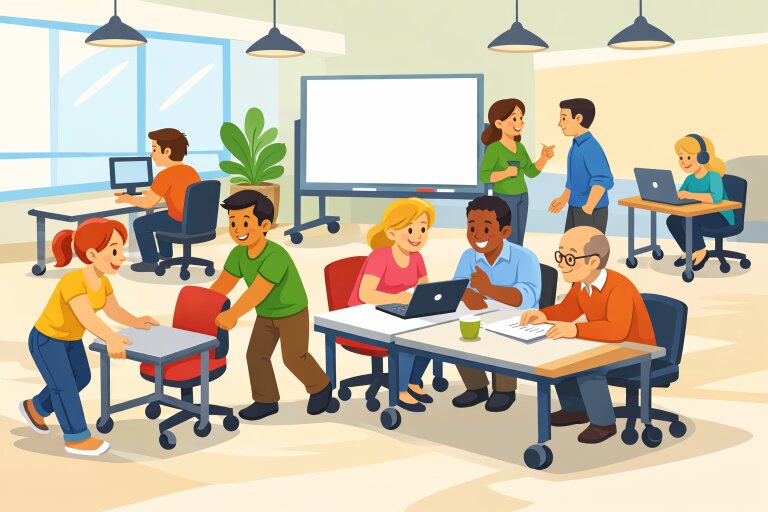
Today’s offices look nothing like those of the past, where rows of cubicles limited how teams interacted. Modular workstations are at the core of this transformation, giving managers and staff the freedom to alter workflows and spatial layouts as needs change. These systems can be quickly reorganized to facilitate new projects or accommodate changes in team size or purpose. A notable example is URBANICA’s Modular Smart Workstations, which include height-adjustable desks and ergonomic seating to transition instantly between private work and collaborative sessions. Such flexibility promotes not just efficiency but also fosters creativity and a sense of ownership among employees.
AI-Driven Platforms: Optimizing Space Utilization
The workplace has also embraced artificial intelligence for smarter management. AI-powered platforms analyze meeting patterns, usage data, and employee preferences to recommend optimal desk assignments and meeting room bookings. Solutions like those from inspace are making it easier for facilities managers to ensure that every corner of the office delivers value, reducing wasted space and minimizing friction. By learning from daily office patterns, AI enables leaders to create responsive work habitats that enhance team satisfaction and ensure resources are put to best use
Collaborative Desks: Fostering Teamwork
Gone are the days of siloed departments and stifled creativity. Collaborative desks are designed to break down physical and symbolic barriers, placing emphasis on open communication and the free exchange of ideas. These shared stations increase opportunities for spontaneous brainstorming and team learning. Many organizations report stronger innovation pipelines and improved morale when spaces are designed to encourage movement and impromptu discussions. Collaborative desk setups cater especially well to start-ups and creative industries where teamwork drives results.
Flexible Design Solutions: Creating Dynamic Environments
Effective workspaces must be able to transform on demand, adapting to presentations, mentoring sessions, team scrums, or solo research. Movable walls and partitions, which can be set up or removed with ease, are now standard in many innovative offices. This adaptability also means physical environments can evolve as businesses grow, without the expense of constant renovations. Leaders find that these flexible layouts allow for multifunctional use of space, a critical advantage in managing both budgets and changing workforce dynamics.
Ergonomic Office Equipment: Supporting Health and Productivity
Lending equal weight to comfort and productivity, the latest ergonomic furniture prioritizes employee health. Adjustable sit-stand desks, chairs with lumbar support, and peripherals designed with biomechanics in mind lower physical strain and encourage good posture. A healthy team is a happy and efficient one, as studies have consistently shown a strong link between office comfort, lower absenteeism, and heightened productivity. Investment in ergonomic solutions signals an organization’s commitment to its people and its performance.
Integrating Digital Collaboration Tools with Office Mobility
In the age of digital transformation, integrating cutting-edge technology with physical workspace mobility has become increasingly essential. Smart offices are utilizing cloud-based platforms, wireless charging stations, and real-time communication tools to facilitate seamless collaboration regardless of physical location. For example, team members can contribute to brainstorming sessions from both the office and remote locations using digital whiteboards and task management software. This marriage of digital and physical agility ensures projects advance smoothly, even as work patterns fluctuate between in-person and remote. It also allows businesses to tap into a global talent pool, bringing in diverse perspectives that fuel innovation and broaden problem-solving approaches.
Moreover, smart sensors and IoT-enabled devices help monitor and manage everything from lighting and temperature preferences to occupancy levels in meeting areas. These responsive systems not only maximize comfort but also reduce energy usage, aligning with sustainability initiatives, a growing concern among modern organizations. The ability to analyze workspace usage data further empowers managers to refine layouts and policies, ensuring that office mobility solutions translate into measurable improvements in productivity and employee satisfaction.
Encouraging Employee Autonomy and Inclusiveness
Modern office mobility is not just about design or digital tools; it is also about encouraging a culture where employees feel empowered to customize their work experiences. Providing options for varied seating arrangements, private focus pods, and open collaboration zones fosters inclusiveness by supporting different work styles, neurodiversities, and accessibility needs. Additionally, flexible policies allow employees to choose where and how they work best, helping them strike a healthy balance between personal preferences and organizational goals. Companies that encourage such autonomy often see increased motivation, lower stress levels, and higher retention rates.
As teams grow more diverse and globally distributed, building inclusive, agile workspaces is key to recruitment, engagement, and long-term business success. The ongoing evolution of workplace mobility creates opportunities for businesses to remain ahead of the curve, adapting swiftly to changing expectations and championing both performance and well-being for every member of the team.
Conclusion
Workplace mobility innovations are redefining how and where business gets done. From the flexibility of modular workstations and the efficiency of AI-driven management to the connection fostered by collaborative desks and ergonomically supportive furniture, these solutions place people at the center of work. By harnessing these trends, companies will remain resilient and competitive while nurturing a work culture that celebrates both agility and well-being.