Key Takeaways
- Adding electric appliances can significantly change a home’s electrical demand.
- Open breaker spaces do not automatically indicate that the electrical service has sufficient capacity.
- A professional load calculation helps determine whether planned equipment can operate safely.
- Many major appliances require dedicated circuits, correctly sized wiring, and proper breaker protection.
- Load management, energy efficiency improvements, and early planning can sometimes avoid a larger upgrade.
- Permits, inspections, utility coordination, and qualified electrical work are essential parts of the project.
Home electrification can make everyday life more comfortable and efficient, but it also changes how much electricity a house needs at peak times. Before ordering an EV charger, heat pump, induction range, electric water heater, home battery, or workshop equipment, homeowners should understand whether their current electrical system can support it.
For homeowners considering electrical panel replacement Denver, the best first step is not simply choosing a larger panel. It is a review of the full system, including current energy use, future plans, available panel space, service capacity, wiring condition, and local permitting requirements.
Why Electrical Planning Matters
Older homes were designed for lower electrical demand, with gas used for heating, water, cooking, and drying, while electricity mainly powered lighting and smaller appliances. Today, households add heat pumps, vehicle chargers, induction cooktops, electric dryers, heat pump water heaters, battery systems, and office setups. Electrification involves replacing non-electric fuel equipment with electric alternatives. The U.S. Department of Energy highlights its benefits and considerations, especially in buildings and transportation. For homeowners, ensuring proper electrical infrastructure is essential before installing new equipment.
List Every Current and Planned Electrical Load
Start with a complete inventory of what uses electricity today, then add anything you may install during the next three to five years. This gives an electrician a more accurate picture than a request focused on only one appliance.
- Heating and cooling systems, including furnaces, air conditioners, and heat pumps
- Water heaters, sump pumps, well pumps, and sewage ejector pumps
- Electric ranges, ovens, dryers, dishwashers, refrigerators, and freezers
- EV chargers, garage equipment, workshop tools, and air compressors
- Pool pumps, hot tubs, saunas, and outdoor kitchen equipment
- Home offices, server racks, medical devices, and entertainment systems
- Solar equipment, battery storage, and standby generators
Include future projects, even if they are not yet funded. Planning for a heat pump now and an EV charger next year may be more cost-effective than opening walls, replacing conduit, or modifying service equipment twice.
Check Panel Size, Condition, and Available Space
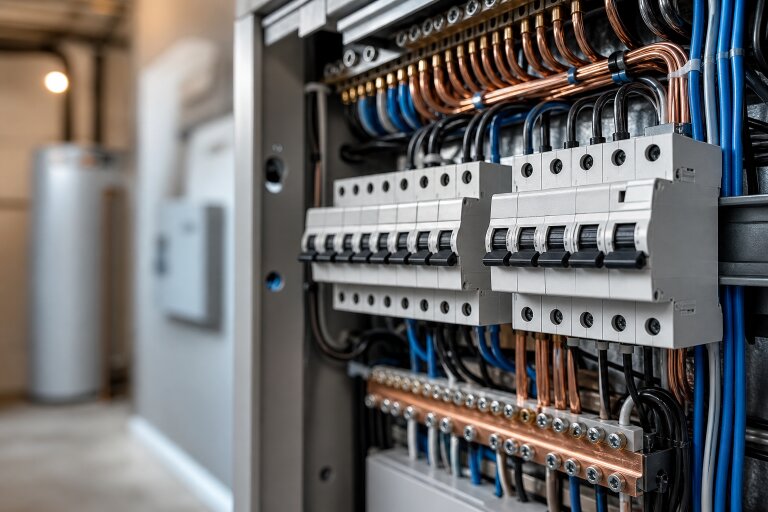
The amperage printed on a main breaker is important, but it is only one part of the evaluation. A 200-amp panel, for example, may have limited usable capacity after the home’s existing loads are considered. Conversely, a panel with unused breaker slots may still need a service upgrade if the main equipment or utility service cannot safely support additional demand.
An electrician should review the panel, main breaker, service conductors, meter equipment, grounding and bonding, circuit labels, breaker condition, and visible signs of age or damage. Physical room for breakers and electrical capacity are two separate issues.
Use a Professional Load Calculation Before Choosing Equipment
A load calculation estimates how much electricity a home is expected to need when major systems operate during the same period. It considers the home’s square footage, existing appliance loads, heating and cooling equipment, planned additions, and applicable demand factors.
This process helps answer practical questions. Can the home support a 48-amp EV charger? Is there enough capacity for an induction range and a heat pump water heater? Would a larger heat pump require a service change? The federal Building Science Education program offers useful background through its electrical panel assessment guidance for homes adding heat pump systems and other electric equipment.
Know Which Appliances Usually Need Dedicated Circuits
High-demand equipment generally cannot share a standard lighting or receptacle circuit. It may need a dedicated circuit with properly sized conductors, a correctly rated breaker, equipment grounding, and, where required, a disconnect or other protective device.
- Level 2 EV chargers
- Central air-conditioning systems and heat pumps
- Electric ranges, cooktops, wall ovens, and dryers
- Electric and heat pump water heaters
- Hot tubs, pool pumps, and spa equipment
- Large stationary tools and garage workshop equipment
A homeowner may have enough capacity for an induction range today, yet lack room for both a future EV charger and a whole-home heat pump. Looking ahead helps prevent an installation plan from becoming too limited as the household’s needs change.
Compare a Service Upgrade With Load Management
A larger electrical service suits homes with multiple major loads, older panels, limited capacity, or extensive renovations, providing space for future circuits and easing later projects. However, load management systems, like scheduled EV charging, smart controls, or adjusting equipment settings, can often replace a service upgrade by monitoring and coordinating appliances to prevent simultaneous maximum power draw. The best solution depends on load calculations, long-term plans, budget, equipment needs, and local codes. A qualified electrician can advise if load management fits the installation.
Improve Efficiency Before Increasing Electrical Demand
Before installing larger heating and cooling equipment, improve the home itself where practical. Air sealing, insulation, duct repairs, and properly sized equipment can reduce heating and cooling demand. A smaller, correctly designed heat pump may require less electrical capacity than oversized equipment installed in a drafty home.
- Check attic, wall, and crawlspace insulation where accessible.
- Seal major air leaks around penetrations, doors, windows, and ductwork.
- Inspect ducts for leaks, poor connections, and inadequate insulation.
- Confirm that heating and cooling equipment is properly sized.
- Review electrical needs after efficiency improvements are considered.
Plan for Permits, Inspections, and Utility Coordination
Electrical upgrades can involve more than installing a new breaker. Depending on the project, work may require permits, inspections, a utility disconnect, meter changes, service conductor replacement, or coordination with the local utility provider.
Before work begins, ask these questions:
- Who is responsible for obtaining the permit?
- Will the utility need to disconnect power during the project?
- Does the work include the meter, service conductors, or grounding system?
- Which parts of the installation will be inspected?
- Will the completed panel schedule clearly identify all new circuits?
Red Flags That Require an Electrical Review
Don’t wait for major appliance issues to seek professional help. Frequent breaker trips, flickering lights, warm outlets, buzzing, burning odors, corrosion, damaged breakers, and unlabeled circuits signal the need for evaluation. Homeowners must not remove panel covers or repair energized equipment, as improper handling can cause shock, fire, damage, inspection issues, and insurance problems.
Common Questions Homeowners Ask
Does every EV charger require a panel upgrade?
No. The answer depends on the charger’s output, the home’s existing loads, available capacity, and future equipment plans. A load calculation should guide the decision.
Can an older electrical system support a heat pump?
Sometimes. Some homes only need a new dedicated circuit, while others need wiring changes, load management, panel replacement, or a larger service.
Is a larger panel always the best choice?
Not necessarily. The right solution may be a service upgrade, a subpanel, load management, more efficient equipment, or a combination of these options.
Conclusion
Planning a home’s electrical load is about more than selecting a panel size. A clear list of current and future equipment, a professional load calculation, efficiency improvements, and early coordination with a licensed electrician can make electrification projects safer, smoother, and more cost-effective. Good planning leaves room for the next major upgrade, whether it is an EV charger, heat pump, battery system, or another high-demand appliance.