Key Takeaways
- A coastal home can feel connected to its setting without relying on obvious nautical decor.
- Successful planning begins with real routines, easy circulation, storage, daylight, and comfort.
- Durable materials are essential where sand, sun, salt air, moisture, pets, and guests are part of daily life.
- A limited palette, layered lighting, and tactile finishes create a relaxed atmosphere without making rooms feel bare.
- Indoor and outdoor spaces should function as one practical, flexible living area.
Coastal Design Should Feel Lived In
A well-designed coastal home should feel easy from the moment the door opens. It should welcome wet towels, sandy feet, casual meals, long weekends, and quiet mornings without looking overly themed or precious. The most memorable spaces capture the openness, softened light, and natural textures of the coast rather than repeating shells, anchors, or stripes in every room.
For homeowners planning a renovation, new build, or thoughtful refresh, working with experienced Interior Designers Santa Barbara can help turn a broad vision into rooms that support everyday life. The goal is not to recreate the beach indoors. It is to create a calm backdrop that feels appropriate to the setting and still works beautifully in every season.
Start With How the Home Is Used
Before selecting paint, tile, or furniture, map out what happens in the home on an ordinary day. Consider how people arrive, where they drop bags and shoes, how meals are prepared, where work gets done, and how guests move from the kitchen to the patio. A beautiful layout can quickly become frustrating if it does not account for the routines that create clutter and congestion.
Ask Practical Questions First
- Where will beach gear, towels, sunscreen, and outdoor cushions be stored?
- Can the kitchen handle both quick breakfasts and larger gatherings?
- Is there a quiet spot for reading, working, or resting away from busy zones?
- Can visitors reach outdoor areas without walking through private bedrooms?
- Are the main walkways clear when chairs, doors, and drawers are in use?
A simple room-by-room activity list often reveals priorities that inspiration images do not. It may show the need for a larger entry bench, more pantry storage, a flexible guest room, or an outdoor rinse area near the most-used door.
Use Natural Light as a Design Tool
Daylight can make modest rooms feel more open, bring out the depth of natural materials, and change the mood of a home throughout the day. Review how sunlight moves through each room before committing to paint colors or placing major furniture. North- and south-facing windows are generally easier to manage, while east- and west-facing light can create stronger glare and heat. The U.S. Department of Energy offers helpful guidance on daylighting, including strategies for controlling sunlight through window placement, shading, and interior planning.
Use sheers, woven shades, or lined drapery where privacy and glare control are needed. Put desks and reading chairs near useful daylight, but avoid placing screens directly in the path of strong sun. In the evening, layer ambient lighting with task lights for cooking and reading, plus accent lighting that highlights art, plaster, or wood grain. A single overhead fixture rarely creates the warmth a coastal home needs after sunset.
Build a Coastal Palette Without Making a Theme
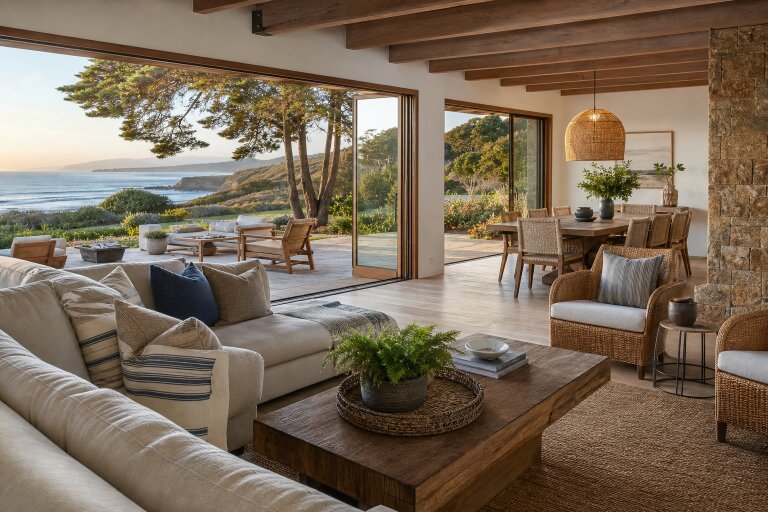
Start with two or three versatile base tones, such as warm white, sand, pale mushroom, soft gray, or muted taupe. Then add restrained accents drawn from the local landscape: weathered green, clay, deep ocean blue, charcoal, or sun-washed rust. This approach gives rooms character while leaving enough visual space for views, natural light, and changing seasonal details.
Use a bolder color in artwork, pillows, ceramics, or a painted cabinet instead of spreading it across every surface. Test samples in the morning, afternoon, and evening, especially in rooms with strong reflected light from water, paving, or pale exterior walls. The most relaxed schemes usually include some contrast through darker wood, aged metal, stone, or textured textiles.
Choose Materials That Can Handle Coastal Conditions
Coastal living places extra demands on finishes. Sun, moisture, sand, salt air, and frequent traffic can wear down delicate materials quickly. Choose with performance in mind, particularly for entryways, kitchens, bathrooms, outdoor rooms, and furniture used by children, pets, or guests.
- Select washable or performance upholstery for everyday seating.
- Use moisture-resistant flooring in entries and lower-level spaces.
- Choose corrosion-resistant hardware and fixtures near exposed exterior openings.
- Favor easy-care counters and outdoor surfaces over materials that require constant sealing or special cleaning.
- Bring warmth through wood, stone, ceramic, plaster, linen, cotton, and woven fibers in appropriate locations.
Natural does not have to mean fragile. A well-finished wood table, durable stone surface, or tightly woven textile can deliver texture without adding unnecessary maintenance. For larger renovations, plan moisture control early. The EPA notes that controlling moisture is central to preventing mold and maintaining healthier indoor conditions, especially in humid environments.
Make Indoor-Outdoor Movement Easy
A coastal home feels more expansive when the interior and exterior support each other. Keep paths to decks, patios, gardens, and dining areas direct and uncluttered. Repeat related colors or materials across the threshold, such as warm wood tones, stone, or woven textures, so the transition feels intentional rather than abrupt.
Outdoor areas need more than a good view to earn regular use. Add shade, comfortable seating, weather-appropriate lighting, and storage for cushions or serving pieces. Address wind, drainage, privacy, and afternoon glare during planning, not after furniture has been purchased. Small changes, such as a screen, planter, umbrella, or built-in bench, can make an exposed area much more usable.
Plan Storage Before Adding Decor
Calm rooms are rarely accidental. They usually have enough storage to keep the necessities close but out of sight. Build storage around the items that create daily disorder: bags, shoes, chargers, linens, toys, cleaning supplies, and outdoor equipment. Include closed cabinets near entry points and exterior doors, then reserve open shelving for frequently used items or objects that genuinely add warmth.
Look for furniture that works harder, including storage ottomans, benches with drawers, nightstands with real capacity, and dining pieces that hold serving ware. A less crowded room often feels more welcoming than one filled with decorative purchases.
Mix Comfort With Clean Lines
Minimal does not need to feel cold. Pair simple furniture silhouettes with rounded edges, soft upholstery, textured rugs, and materials that invite touch. Choose seating for genuine comfort, not only for its profile in a photograph. Leave room to move around each piece, and let one element, such as a fireplace, view, artwork, or dining table, serve as the focal point instead of creating several competing moments.
A Simple 2026 Planning Checklist
- Write down daily routines and the spaces that support them.
- Identify the best views, breezes, daylight, and privacy zones.
- List needed storage before selecting furniture or decor.
- Choose a restrained base palette and test it in changing light.
- Separate high-use, durable finishes from purely decorative details.
- Plan lighting, shade, airflow, and indoor-outdoor access early.
- Review every decision for comfort, maintenance, and long-term use.
Conclusion
A calm coastal home is built through thoughtful choices, not more beach-inspired objects. When circulation is easy, materials are durable, storage is sufficient, and light is carefully managed, the setting can do much of the design work. Focus on comfort, restraint, and real routines, and the result will feel relaxed, personal, and ready for everyday coastal life.