Ensuring workplace safety and efficiency, especially in environments that require frequent elevated access, is fundamental to both productivity and worker well-being. New advancements in the design and technology of platforms and ladders are redefining safety standards and transforming work routines across different industries. By integrating the latest in ergonomic design, materials science, and intelligent safety features, today’s workspaces can operate with minimal risks and improved efficiency. For business owners and safety officers seeking the best equipment and guidance, Diverse Supply Inc offers a wide array of modern solutions that help create optimal work environments tailored to unique needs.
Employers who prioritize safety and upgrade their platforms and ladders benefit not only from reduced workplace injuries but also from greater morale and better operational effectiveness. The right equipment empowers teams to accomplish tasks with confidence and minimizes downtime related to accidents or equipment failures. As industries evolve and increasingly demand specialized access solutions, the importance of staying ahead with innovative tools becomes even more critical.
Ergonomic Designs and Lightweight Materials
The foundation of any safe work-at-height solution starts with its physical construction. Recent innovations in platforms and ladders include the use of lightweight yet durable materials such as aluminum and fiberglass. These materials offer significant advantages in portability and ease of handling, helping reduce worker fatigue and minimize strain injuries. Additionally, aluminum and fiberglass provide greater corrosion resistance, extending product lifespan and lowering long-term costs.
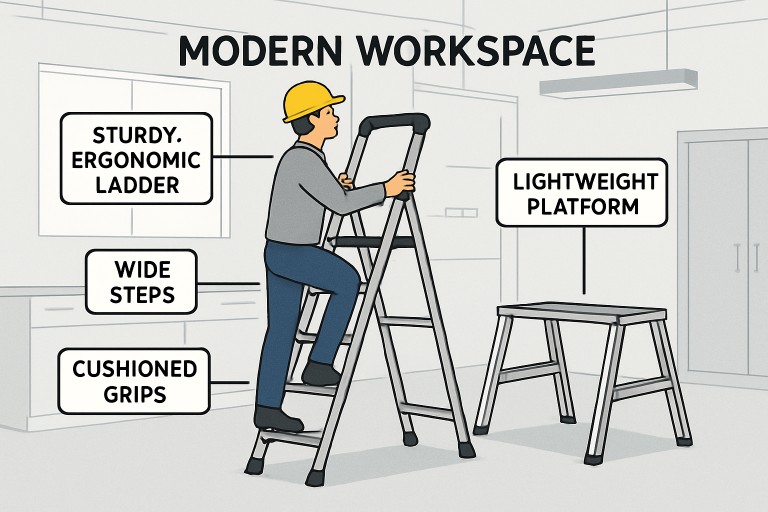
Ergonomic considerations are now standard in the design of many ladders and access platforms. Classic features such as cushioned grips, wide slip-resistant steps, and adjustable heights allow workers to maintain a secure footing and handle tools efficiently, even at varying elevations. Such advances have been shown to reduce workplace accidents and improve users’ on-site confidence.
Technological Innovations in Ladder Safety
The integration of innovative technology into ladders is helping to redefine workplace safety protocols. Smart ladders equipped with sensors can detect positioning errors and unstable setups, providing immediate feedback to the user through visual or audible alerts. These ladders may feature color-coded indicators or digital displays that clearly communicate whether the ladder is safe to use, offering an extra layer of protection, especially in busy job sites.
Many construction firms and industrial companies now leverage visual safety systems that promote proper usage and reduce human error. By combining traditional safety practices with advanced technology, organizations can establish a culture of vigilance that proactively addresses risks. For further information on advancements in occupational safety, the OSHA Fall Protection resource provides valuable regulatory guidance and emerging trends in fall risk solutions.
Custom Access Platforms for Unique Workspaces
No two workspaces are the same, which is why custom access platforms are increasingly popular among facilities with specialized equipment or challenging layouts. Tailored to exact requirements, these platforms facilitate routine maintenance, repairs, or inspections that standard ladders cannot accommodate. Materials like fiberglass-reinforced plastic (FRP) are often chosen for their non-conductive and corrosion-resistant properties, ensuring ongoing safety even in harsh or hazardous conditions.
Modular platform designs allow for continual adaptation as workspace needs change. Sections can be added, removed, or reconfigured to suit new machinery, storage configurations, or workflow patterns, offering excellent value for dynamic industrial environments. These adaptive solutions support both short-term flexibility and long-term efficiency.
Biophilic Design: Enhancing Workplace Environments
Workers’ productivity and well-being benefit from thoughtful workspace design that considers both the physical structure and the psychological environment. Integrating biophilic design elements, such as live plants, green walls, water features, and ample sunlight, helps bridge the gap between built environments and the calming effects of nature. This connection is not only aesthetic but has been shown to reduce stress, enhance focus, and lower absenteeism rates.
As discussed in the Architectural Digest guide on biophilic design, organizations that make even modest adjustments to their space reap significant rewards. From open-plan offices with garden courtyards to industrial facilities with strategically placed planters, biophilic elements are proving to be a simple yet effective way to improve workplace satisfaction and performance.
Case Studies: Improving Safety and Productivity
Case studies offer persuasive evidence of the benefits of innovative platforms and ladders. In one notable example, a large distribution center implemented custom forklift work platforms as part of its regular maintenance routine. This switch allowed in-house teams to take responsibility for elevated repairs and inspections, eliminating the need for external contractors. The result was a 30% reduction in outsourced maintenance costs and a 40% improvement in response time for urgent repairs.
Similar success stories are emerging across sectors such as aviation, utilities, and manufacturing, with companies reporting fewer workplace injuries, faster project turnaround, and improved compliance with safety regulations. These real-world successes highlight why investing in the latest access solutions is critical for future-ready operations.
Conclusion
The drive for safe and efficient workplaces has paved the way for innovative advancements in platforms and ladders. By prioritizing ergonomic design, adopting new safety technologies, implementing custom platforms, and considering the psychological impact of biophilic design, organizations can enhance both team safety and productivity. Staying informed about industry innovations and strategically integrating them into daily operations leads to tangible improvements in worker safety, operational costs, and overall job satisfaction.